


Can I reuse existing ductwork when replacing AC?
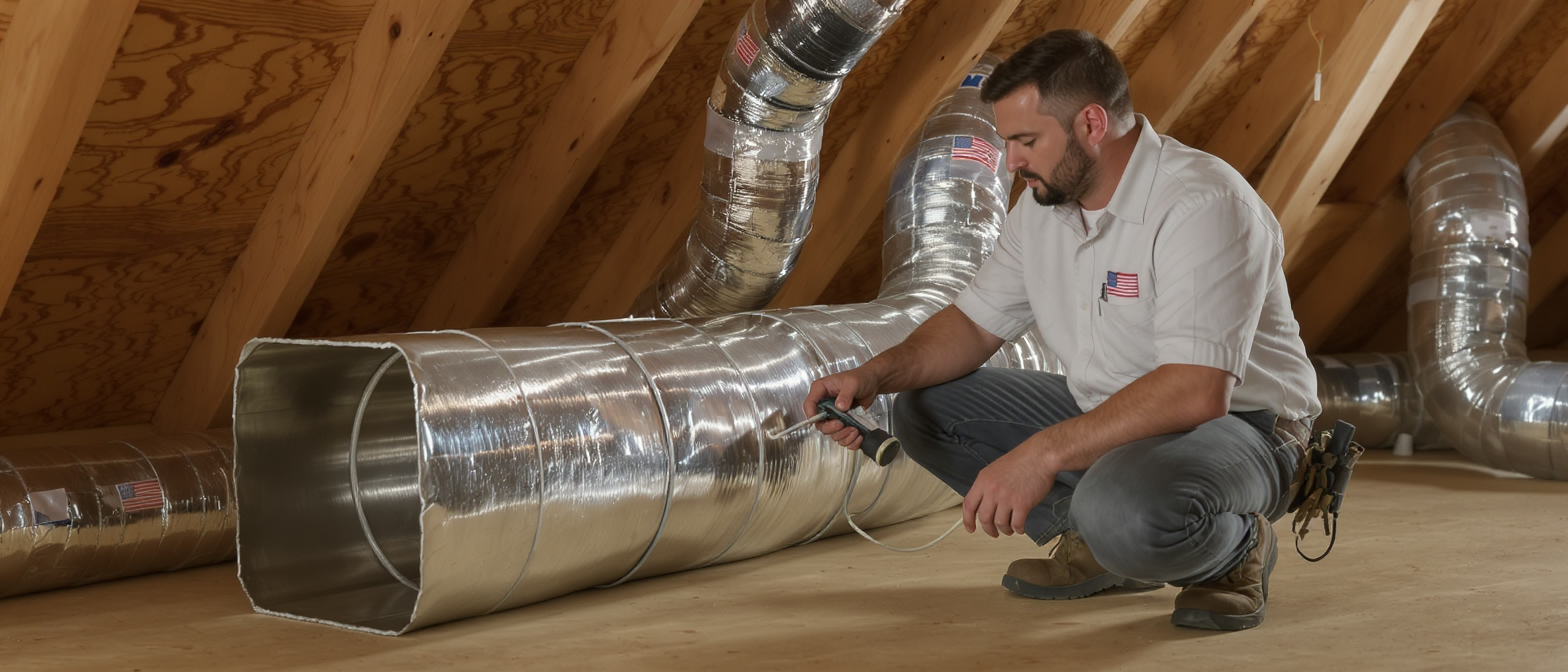
Can I reuse existing ductwork when replacing AC?
Short answer: sometimes. Reusing ductwork during an AC replacement can be smart and cost-effective, but only if the ducts are the right size, airtight, clean, and compliant with current code. Modern high-efficiency systems (including inverter heat pumps and ducted mini-splits) are more sensitive to airflow and static pressure. That means old, leaky, or undersized ducts can undermine comfort, efficiency, and equipment life.
When reuse is realistic
- Ducts are properly sized for the new system (based on Manual D or equivalent calculations).
- Static pressure is within the new equipment’s allowable range.
- Leakage is low or can be brought down with professional sealing.
- Insulation is intact, with adequate R-value for attic or crawl spaces.
- No visible damage, kinks, crushed flex runs, or rusted sheet metal.
- Layout provides enough return-air capacity and balanced supply to each room.
Red flags that point to repair or replacement
- Undersized or oversized trunks/branches causing weak airflow or noise.
- High duct leakage (hot/dirty attic or crawl air entering the system).
- Contamination or persistent odors that cleaning cannot address.
- Uninsulated or poorly insulated ducts in hot attics.
- Flex duct with long runs, tight bends, or compression.
- Outdated materials or possible hazardous wrap (for example, older asbestos-containing insulation—do not disturb; this requires a licensed abatement path).
- Code noncompliance or missing smoke/fire dampers where required.
How professionals evaluate ducts
A thorough assessment goes beyond a quick glance. Expect the following:
- Static pressure measurement before and after the filter/coil to confirm the duct system is within the equipment’s limits.
- Duct leakage testing to quantify losses and locate problem joints.
- Airflow and room-by-room balancing checks against a Manual D design.
- Camera or visual inspection for crushed runs, disconnected joints, and biological growth.
- Return sizing review—many homes need additional return pathways to reduce noise and improve comfort.
In California, AC replacement and duct alterations often trigger Title 24 requirements and HERS testing. That means specific efficiency and leakage standards must be verified by a qualified third party before final sign-off.
Sizing and modern equipment considerations
Today’s high-SEER2 systems and inverter heat pumps deliver their best performance with low external static pressure and properly sized ducts. An AC that was “fine” 15 years ago may not be compatible with your existing duct layout. Sometimes partial upgrades—adding a return, replacing a restrictive plenum, or redoing a few key branches—allow much of the system to be reused while protecting comfort, efficiency, and warranty.
Repair vs. replace: practical options
- Seal and reinforce: Mastic and UL 181-rated tape at joints, boots, and plenums can dramatically reduce leakage.
- Targeted replacements: Swap out damaged or restricted sections and upgrade the return plenum.
- Improve insulation: Boost duct insulation levels in attics or garages to reduce heat gain/loss.
- Rebalance: Adjust dampers, add transfer grilles, or resize branches to fix hot/cold rooms.
- Full replacement: Best when ducts are aged, contaminated, unsafe, or fundamentally undersized.
Health and indoor air quality
Leaky ducts can pull dusty attic air, fumes, and allergens into living spaces. They also spread contaminants through the home. Tight, properly sized ducts protect indoor air quality, reduce humidity swings, and support effective filtration (consider right-sized returns and high-MERV filters that your blower can handle). Our core mission is simple: healthy air at home for a healthier life.
Safety, permits, and insurance
DIY duct alterations can be risky and may violate local codes. Many manufacturers and insurance carriers require installation and duct modifications by qualified HVAC professionals to maintain warranty and coverage. In many jurisdictions, permits and inspections are mandatory for AC replacement and duct changes. This is especially relevant across Los Angeles County and nearby areas, including Orange County, Ventura County, and Western Riverside County.
Service areas and project types
Typical cities we handle include Los Angeles, Long Beach, Pasadena, Glendale, Burbank, Santa Monica, Anaheim, Irvine, Santa Ana, Fullerton, Ventura, Thousand Oaks, Oxnard, Riverside, Corona, and Temecula. We work on residential and commercial systems, and we’re especially effective on large or complex projects that need careful airflow engineering.
Who we are
#1 AC Guys is a family business in Southern California with 80+ years of engineering experience across four generations. Our engineers trained at the manufacturers’ factories of Fujitsu (Japan), Mitsubishi Elektrik (Thailand), Midea (China), Gree (China), and Hier (China). That deep technical foundation helps us solve challenging ductwork and AC replacement scenarios with an engineering-first approach.
FAQ
How long do ducts last?
Well-installed ducts can last 15–25 years. UV, heat, pests, and moisture reduce lifespan, especially for flex duct in attics.
Is duct cleaning enough?
Cleaning helps only if the ductwork is structurally sound and tight. If leakage, mold risk, or damage is present, repair or replacement is more effective than cleaning alone.
Will reusing ducts hurt efficiency?
If ducts are leaky or restrictive, yes. Proper sealing, insulation, and sizing are critical for SEER2-rated systems and inverter heat pumps.
Can I mix flex and metal duct?
Yes, when designed correctly. Use smooth-radius fittings, avoid long compressed flex runs, and keep external static pressure low.
Bottom line
You often can reuse existing ductwork when replacing an AC, but only after a proper evaluation. Testing for static pressure and leakage, checking sizing against Manual D, and confirming California Title 24/HERS compliance protect your comfort, efficiency, and warranties. In many cases, a targeted duct upgrade—rather than a full replacement—delivers the best long-term result.
Yasmine is currently an Associate Professor of Psychology at Mount Saint Mary College where she teaches a wide array of courses in the Psychology department. She is a Fulbright Scholar spent a year working at the Medical Decision Making Center at Ono Academic College in Israel.
Yet, as many higher education professionals can surely attest to, I have also witnessed the other challenge in group decision making. In academia, engaging in critical dissent is encouraged (reviewed by Jetten & Hornsey, 2014), and while this is a fine attribute, practically,

