


Do Smart or Programmable Thermostats Save Money?
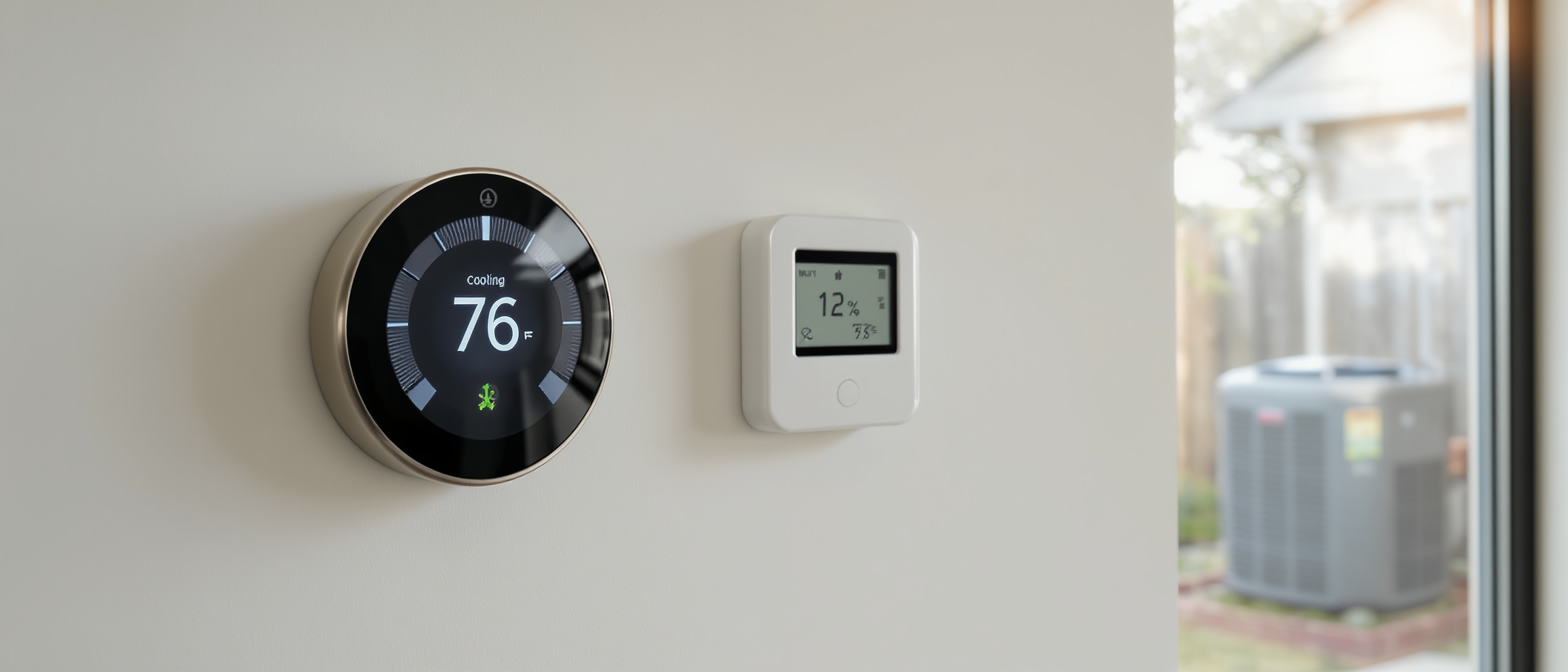
Smart vs. programmable: what’s the real difference?
A programmable thermostat follows a schedule you set: temperatures change at specific times on specific days. A smart thermostat does that and more. It can learn your routine, use occupancy sensors, apply geofencing via your phone, display energy reports, and adjust to utility time-of-use rates. Both can cut waste, but smart models add automation and analytics that help you stick to a plan without constant tweaking.
Where the savings actually come from
Right-sized setbacks and setups: Lowering heat or raising cooling when you’re away reduces runtime. Returning to a comfortable setpoint just before you arrive prevents overcooling or overheating.
Occupancy and geofencing: Smart thermostats trim runtime when nobody’s home and resume before you walk in.
Learning algorithms: Over time, smart models estimate how fast your home heats or cools, so they avoid overshoot and maintain tighter control.
Time-of-use optimization: In areas with TOU rates, shifting some conditioning outside peak periods can reduce bill spikes.
Multistage and variable-speed control: Better staging and fan modulation improve efficiency and comfort compared with simple on/off.
Used correctly, many homes see noticeable reductions—often in the 8–15% range for heating and cooling energy—though your results depend on climate, equipment, and behavior.
When a smart thermostat might not save much
Someone is home all day: Fewer opportunities for deep setbacks.
Poor building envelope: Leaky ducts, low insulation, and unsealed attics can erase thermostat gains.
Extreme setbacks on heat pumps: Big winter setbacks can trigger costly auxiliary heat. Smart models with heat-pump lockouts and gradual recovery help, but configuration matters.
Incompatible systems: Some communicating or mini-split systems need the manufacturer’s controls or a proper gateway.
Heat pumps, furnaces, boilers, and mini‑splits
Compatibility is key. Heat pumps benefit from features like intelligent aux-heat lockout and adaptive recovery. Gas furnaces and hydronic boilers usually work well with most modern stats, but staging and outdoor reset may require advanced settings. For ductless and VRF mini-splits (common from Fujitsu, Mitsubishi Elektrik, Midea, Gree, and Hier), the most efficient control is often the factory controller or an approved adapter. Using the wrong interface can disable energy-saving modes or void warranties.
California realities that affect your bill
Marine vs. inland zones: Coastal areas see mild swings, so smaller setbacks work. Inland valleys and foothills face hotter summers and colder nights, magnifying savings from scheduling and TOU-aware control.
Title 24 and demand response: Newer installations may require features like preset setbacks and demand-response capability. Smart thermostats with California Title 24 and ADR support can help you meet code and participate in utility programs.
Best-practice setup for real savings
Pick realistic setpoints: Cooling 75–78°F for occupied hours and 80–84°F away; heating 68–70°F occupied and 62–66°F away are common starting points. Adjust for health and comfort.
Use gradual recovery: Especially for heat pumps to avoid auxiliary heat.
Enable geofencing plus a schedule: Geofencing handles surprises; the schedule anchors daily efficiency.
Place the sensor well: Avoid direct sun, kitchens, and supply vents; consider remote sensors for multi-room balance.
Calibrate and maintain: Verify temperature accuracy and change filters to keep airflow and savings on track.
DIY or call a pro? It’s not always “just two wires”
Most thermostats use low-voltage wiring, but miswiring can short a transformer, damage a control board, or disable safety interlocks. Heat pumps, dual-fuel systems, and multistage equipment add complexity. Communicating systems and many mini-splits may require manufacturer-specific controls or gateways. In addition, insurers and warranty terms often expect qualified specialist involvement for HVAC modifications; in some cases, claims or rebates can be denied after unqualified work. If your system is anything beyond a simple single-stage furnace and AC—or if you’re unsure about C-wire power, staging, or heat-pump configuration—professional commissioning is the safer path.
Commercial buildings and larger homes
For commercial sites and big residences, savings scale with coordination: occupancy scheduling, ventilation control, zoning, and integration with building automation systems. Data logging, trend analysis, and demand-limiting features can smooth peaks and reduce charges while maintaining indoor air quality. These larger and more complex projects benefit from engineering-grade setup and verification.
Comfort, savings, and healthy air
Savings are most meaningful when they don’t compromise health. Smart thermostats can manage ventilation and fan runtime to support filtration and indoor air quality. With well‑designed schedules and proper equipment control, you can balance energy efficiency with our core goal: healthy air in the home for a healthy life.
Typical costs and payback
Programmable thermostats often run $50–$150, and many smart models range from $100–$400+. In homes with consistent schedules and well‑sealed envelopes, payback can arrive within one to three seasons. Add utility incentives, Title 24 compliance benefits, and TOU optimization, and the economics improve—provided setup matches your equipment and usage.
Service area and expertise
#1 AC Guys is a family business serving Los Angeles County and nearby areas, including Orange County, Ventura County, and Western Riverside County. Our fourth‑generation family of engineers brings 80+ years in engineering to residential and commercial HVAC, with a focus on large and complex projects. Our engineers trained at the factory with Fujitsu (Japan), Mitsubishi Elektrik (Thailand), Midea (China), Gree (China), and Hier (China). Cities we commonly reach include Los Angeles, Long Beach, Pasadena, Santa Monica, Anaheim, Irvine, Ventura, Thousand Oaks, Riverside, and surrounding communities.
Bottom line
Yes—smart and programmable thermostats can save money when matched to your equipment and configured correctly. The biggest gains come from realistic scheduling, careful heat‑pump settings, and attention to building envelope and airflow. For complex systems or where insurance and warranty requirements apply, a qualified HVAC specialist should handle selection and commissioning to protect your comfort, safety, and savings.
Yasmine is currently an Associate Professor of Psychology at Mount Saint Mary College where she teaches a wide array of courses in the Psychology department. She is a Fulbright Scholar spent a year working at the Medical Decision Making Center at Ono Academic College in Israel.
Yet, as many higher education professionals can surely attest to, I have also witnessed the other challenge in group decision making. In academia, engaging in critical dissent is encouraged (reviewed by Jetten & Hornsey, 2014), and while this is a fine attribute, practically,

