


How Air Conditioning Affects Indoor Air Quality
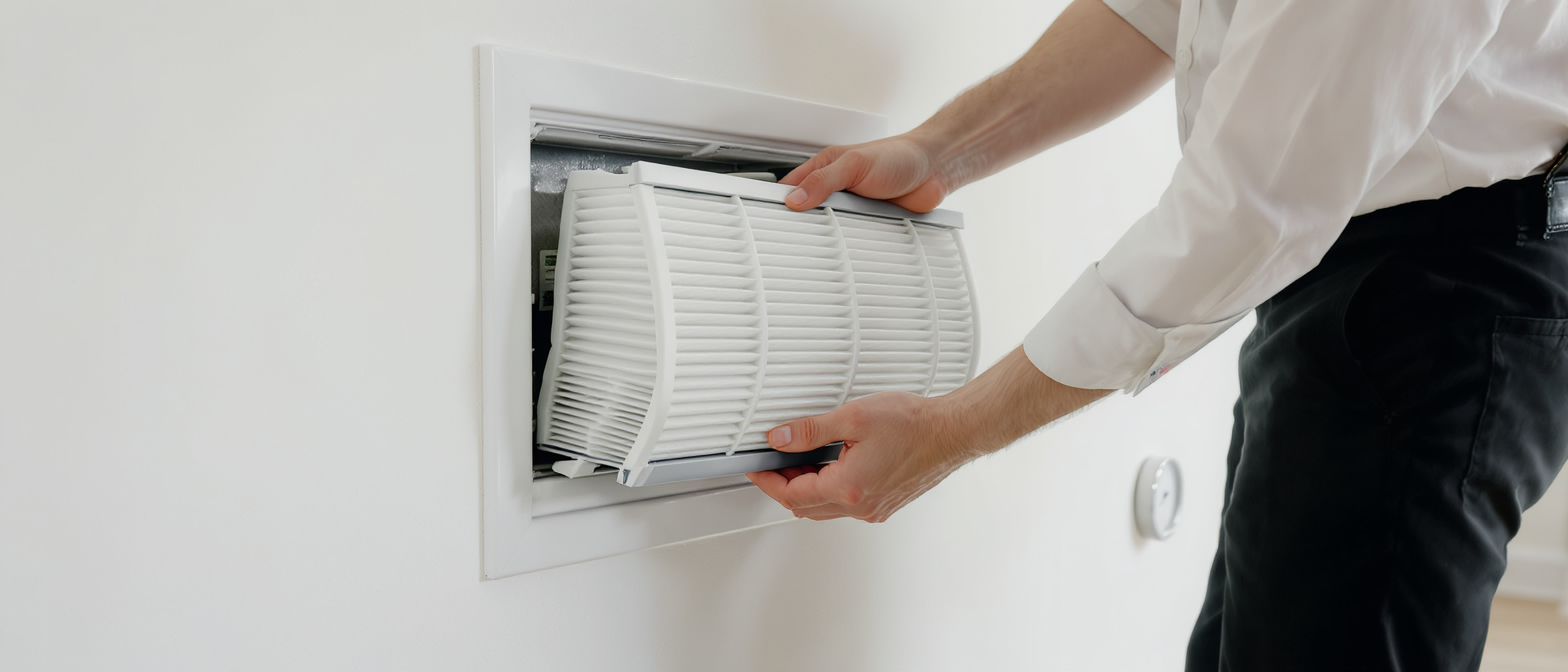
Indoor air quality, often shortened to IAQ, is a health and comfort essential. Your air conditioning system does far more than cool; it filters, dehumidifies, circulates, and, depending on design, may also bring in or condition fresh air. Used correctly, AC improves IAQ. Used poorly or maintained infrequently, it can make air worse. Below is a practical, safety-first guide for homes and businesses.
Filtration: your first line of defense
Every central AC relies on a filter to capture dust, pollen, pet dander, and PM2.5. The rating that matters is MERV. For most systems, MERV 8–13 offers a strong balance of airflow and particle capture. Higher is not always better: a filter that is too restrictive for your blower can reduce airflow, cause coil icing, and raise energy use. HEPA filtration is powerful, but usually requires a dedicated HEPA bypass or portable unit to avoid choking standard duct systems.
Change intervals depend on dust load, pets, and wildfire smoke. A visual check each month and replacement every 1–3 months is a safe starting point. Always match filter size and seal edges so unfiltered air cannot bypass the media.
Humidity control: comfort and health
Ideal indoor relative humidity is generally 40–60 percent. Too high invites mold and dust mites; too low dries airways and increases particulate resuspension. Your AC’s cooling coil naturally removes moisture, but oversize equipment may short-cycle and fail to dehumidify. If humidity drifts outside target, consider right-sizing equipment, adjusting fan speed, or adding dedicated dehumidification. In arid heat or during Santa Ana conditions, humidification may be needed for comfort.
Ventilation and fresh air
Most AC systems cool and recirculate indoor air; they do not automatically add outside air. Good IAQ benefits from controlled ventilation with filtration. Options include outdoor air intakes with economizers, ERVs or HRVs for balanced fresh air, and demand control using CO2 sensors in busy spaces. During wildfire smoke events, throttle back outside air, upgrade to higher MERV, and set systems to recirculate until outdoor AQI improves.
Ductwork, leaks, and pressure balance
Leaky ducts can pull dust, fiberglass, and VOCs from attics, garages, or crawlspaces, then distribute them indoors. Pressure imbalances can backdraft combustion appliances. Professional duct design, sealing, and proper return placement protect IAQ and efficiency. If some rooms are hot, cold, or musty, it may be a duct design or leakage issue rather than a thermostat problem.
Coils, drain pans, and microbial growth
Evaporator coils and condensate drain pans stay cool and wet, making them prime sites for biofilm if neglected. A clogged condensate drain can overflow, damage building materials, and foster mold. Routine coil cleaning, pan inspection, and drain-line flushes are essential. Where appropriate, UV light at the coil face can inhibit microbial growth on surfaces; it is not a substitute for filtration or cleaning, but it can reduce organic buildup between service visits.
Controls and fan settings
Thermostat settings affect IAQ. Fan set to On can help even temperatures but may re-evaporate water from the coil, raising humidity and resuspending particles if filters are dirty. Fan set to Auto usually provides better dehumidification. IAQ monitors that track PM2.5, VOCs, and CO2 help you make data-driven adjustments.
What can go wrong without expertise
DIY work on refrigerant circuits, electrical components, or gas appliances risks injury, code violations, and warranty or insurance problems. Refrigerant handling requires certification; duct modifications affect fire and smoke pathways; incorrect condensate piping can cause water damage. In many cases, insurance carriers require licensed, documented service for claims related to HVAC, water damage, or smoke intrusion. When in doubt, involve a qualified specialist early.
Southern California specifics
Our region sees wildfire smoke, coastal corrosion, traffic-related ultrafine particles, and big swings between dry heat and marine layers. During smoke events, use higher MERV filters and seal infiltration points. Near the coast, keep coils and outdoor units clean to limit salt-driven corrosion. In dense urban corridors, consider enhanced filtration and positive-pressure ventilation to reduce infiltration of roadway pollutants.
Service area and typical cities
We support homes and commercial facilities across Los Angeles County and nearby areas including Orange County, Ventura County, and Western Riverside County. Common service cities include Los Angeles, Long Beach, Pasadena, Santa Monica, Glendale, Anaheim, Irvine, Huntington Beach, Thousand Oaks, Oxnard, Ventura, Riverside, Corona, and Moreno Valley.
Our engineering-first approach
#1 AC Guys is a family-run HVAC team in Southern California with 80+ years of combined experience in engineering across four generations. Our mission is healthy air at home for a healthy life. We specialize in complex residential and commercial projects where airflow, load calculations, and IAQ controls matter most. Our engineers received factory training at Fujitsu (Japan), Mitsubishi Elektrik (Thailand), Midea (China), Gree (China), and Hier (China).
Practical IAQ checklist for your AC
- Choose the right filter: target MERV 8–13 that your system can handle; seal edges.
- Replace filters every 1–3 months or as needed during wildfire smoke.
- Verify airflow and duct sealing; fix room-to-room pressure imbalances.
- Keep indoor humidity around 40–60 percent; avoid oversizing and short cycling.
- Schedule coil, pan, and condensate drain cleaning; confirm clear, sloped drain lines.
- Use demand-controlled ventilation and quality outside-air filtration.
- Monitor PM2.5, VOCs, and CO2; test carbon monoxide detectors in mixed-fuel buildings.
- Consider IAQ upgrades such as media filters, HEPA bypass, UV light at the coil, and ERV/HRV.
- Document maintenance for warranty and insurance purposes.
Bottom line
Air conditioning can significantly improve indoor air quality by filtering particles, managing humidity, and supporting balanced ventilation. The same system can degrade IAQ if filters are wrong or dirty, ducts leak, coils grow biofilm, or settings are off. Pair the right components with skilled maintenance, and your AC becomes a reliable path to cleaner, healthier indoor air.
Yasmine is currently an Associate Professor of Psychology at Mount Saint Mary College where she teaches a wide array of courses in the Psychology department. She is a Fulbright Scholar spent a year working at the Medical Decision Making Center at Ono Academic College in Israel.
Yet, as many higher education professionals can surely attest to, I have also witnessed the other challenge in group decision making. In academia, engaging in critical dissent is encouraged (reviewed by Jetten & Hornsey, 2014), and while this is a fine attribute, practically,

