


How to keep HVAC maintenance records without voiding the warranty
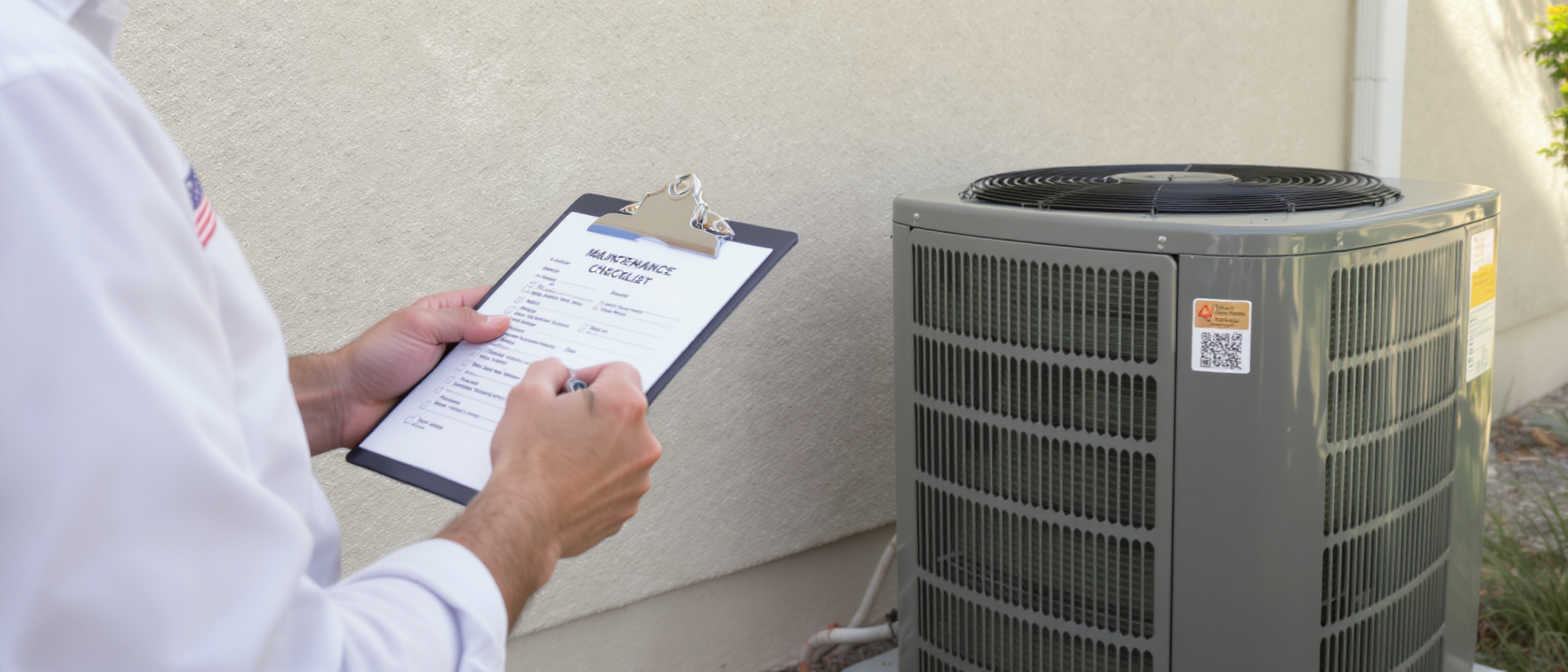
Why maintenance records matter for your warranty
Keeping clear, consistent HVAC maintenance records is one of the simplest ways to protect your manufacturer warranty and keep indoor air healthy. Most warranty terms require proof of routine service performed at the proper intervals, by qualified personnel, and in accordance with the installation and service manuals. Good documentation also helps with insurance claims because many insurers ask for licensed technician notes, dated invoices, and evidence that work followed code and manufacturer guidance.
#1 AC Guys is a fourth-generation family of engineers with 80+ years in engineering. We focus on commercial and residential systems, including large and complex projects. Our mission is healthy indoor air for healthy living—a goal that starts with correct service and reliable records.
What to document every time
- Date, time, and service frequency (e.g., spring cooling tune-up, fall heating tune-up).
- Equipment identification: model and serial numbers for outdoor unit, indoor unit, furnace/air handler, heat pump, or mini split.
- Location and application: rooftop unit, mechanical room, closet, data room, kitchen line, etc.
- Work performed: filter changes, coil cleaning, drain pan and condensate line flush, blower cleaning, belt inspection/tension, electrical tightening, combustion and safety checks, refrigerant leak check, thermostat calibration.
- Measured readings: static pressure, temperature split, superheat/subcool, amperage, voltage, gas pressure, CO reading, airflow estimate, and any alarm codes.
- Parts and materials: OEM part numbers, quantities, refrigerant type and amount, cleaners used, gaskets, belts, capacitors.
- Photos: nameplates, before/after coil and blower, filter condition, drain line, electrical panel, outdoor clearance.
- Technician details: name, company, license number if applicable, and signature (or digital signature).
- Invoices/receipts attached to the visit entry, including labor hours.
- Next due date and recommendations to stay within warranty intervals.
DIY vs. professional service—what keeps your warranty safe
Owners can safely document simple upkeep like replacing return filters, clearing leaves from outdoor units (with the power off), and changing thermostat batteries. Record the date, size and MERV rating of the filter, and a quick photo. However, opening electrical panels, handling refrigerant, altering gas piping, pressure-washing coils, or bypassing safeties can be dangerous and often voids warranties. Manufacturers commonly require that diagnostics, refrigerant work, combustion tuning, and most repairs be performed by qualified technicians. After incidents such as a water leak or electrical short, insurers may also require records from a licensed HVAC specialist.
Insurance and code considerations
After property losses, insurance adjusters often request proof that the system was installed with permits where required, started up correctly, and maintained on schedule. Reports with license numbers, permits, commissioning data, and photos help demonstrate that the equipment was cared for in line with code and manufacturer instructions. Inadequate records or evidence of unqualified work can delay or reduce claim payouts.
How to organize your records
- Create a folder for each property and subfolders for each piece of equipment (e.g., RTU-1, AHU-2, Heat Pump South).
- Include a front sheet listing model/serial numbers, install date, warranty registration number, and filter sizes.
- Attach the commissioning/start-up report, load calculations if available, permits, inspection sign-offs, and user manuals.
- Scan and store every invoice and service report as a searchable PDF. Name files by date and unit, such as 2025-03-10_AHU-2_Spring_Tuneup.pdf.
- Keep a simple service log: date, tasks, readings, parts, and next due date.
- Back up digitally in the cloud and keep a paper copy in the mechanical room binder.
- Add a QR code label on the air handler or rooftop unit that links to the equipment’s record folder.
Acceptable proof: what manufacturers ask for
While each brand differs, the most commonly requested items include: the original install invoice and registration, a commissioning checklist with baseline readings, recurring maintenance reports at prescribed intervals, proof that OEM parts were used, and evidence that repairs were performed by qualified personnel. Photos of nameplates and before/after maintenance conditions are especially helpful when submitting a warranty claim.
Common mistakes that void warranties
- No proof of routine maintenance or long gaps between visits.
- Unlicensed refrigerant handling or electrical work.
- Using non-OEM parts or incorrect refrigerant/lubricant.
- Skipping permits for equipment replacement or major alterations when required.
- Improper coil cleaning (high-pressure jets or harsh acids that damage fins).
- Filters with the wrong size or restrictive ratings causing high static pressure.
- Ignoring manufacturer checklists during start-up and not recording baseline readings.
- Failure to register equipment within the manufacturer’s deadline.
Service frequency guide for Southern California
In our climate, most residential split systems and packaged units benefit from two professional tune-ups per year: one before cooling season and one before heating. High-duty or sensitive environments (restaurants, retail, medical, data, and multi-tenant buildings) may need quarterly service. Check filters monthly at first, then set a replacement cadence—often 30–90 days depending on MERV rating, occupancy, and dust. Before summer heat or wildfire season, verify coils are clean, intakes sealed, and drains flowing.
Engineering roots and factory training
#1 AC Guys is a fourth-generation family of engineers with 80+ years in engineering. Our team has trained at the factory with Fujitsu (Japan), Mitsubishi Elektrik (Thailand), Midea (China), Gree (China), and Hier (China). We specialize in commercial and residential projects, including large and complex systems, with a focus on healthy indoor air.
Service area
We serve Los Angeles County and nearby areas including Orange County, Ventura County, and Western Riverside County. Common cities include Los Angeles, Long Beach, Pasadena, Glendale, Santa Monica, Anaheim, Irvine, Costa Mesa, Ventura, Oxnard, Thousand Oaks, Riverside, Corona, and Temecula.
Quick checklist you can copy
- Record date/time, unit model/serial, and location.
- List tasks and measurements (temperature split, superheat/subcool, static, amperage, gas pressure).
- Attach photos, invoices, and technician details/license.
- Note parts used with OEM numbers.
- Set next due date and keep cloud plus paper backups.
Keeping accurate HVAC maintenance records is not just paperwork—it protects your warranty, strengthens insurance claims, and preserves healthy air. Do what you can safely, document everything, and involve qualified specialists whenever service goes beyond basic owner maintenance.
Yasmine is currently an Associate Professor of Psychology at Mount Saint Mary College where she teaches a wide array of courses in the Psychology department. She is a Fulbright Scholar spent a year working at the Medical Decision Making Center at Ono Academic College in Israel.
Yet, as many higher education professionals can surely attest to, I have also witnessed the other challenge in group decision making. In academia, engaging in critical dissent is encouraged (reviewed by Jetten & Hornsey, 2014), and while this is a fine attribute, practically,

