


How to prepare your home for AC installation
Why preparation matters
A well-prepared home makes AC installation faster, safer, and more precise. Good prep reduces dust, protects finishes, helps the crew access critical areas, and keeps your system within code. It also safeguards warranties and insurance. Many insurance policies and manufacturers require HVAC equipment to be installed and commissioned by licensed professionals; do‑it‑yourself shortcuts can create safety hazards, void coverage, or fail inspections.
This checklist focuses on central air and ductless mini split installations in Southern California homes. It highlights permits, Title 24 and HERS testing, electrical readiness, access, and site conditions that often surprise homeowners.
One week before installation
Confirm system design and load calculation
Make sure a Manual J load calculation and site assessment were completed so equipment capacity, airflow, and duct sizing are right for your home. Verify indoor unit locations, refrigerant line routes, condensate drain termination, thermostat placement, and outdoor condenser clearances.
Permits, HOA, and scheduling
- Permit: Most cities require a permit and final inspection. In California, Title 24 compliance and HERS testing may apply for duct sealing, airflow, refrigerant charge, and thermostats.
- HOA: If you have an HOA, confirm rules on exterior units, noise, and appearance.
- Neighbors: Notify neighbors about work hours if space is tight or parking is limited.
Electrical readiness
- Panel capacity: Check if your electrical panel has room and amperage for a dedicated circuit, disconnect, and surge protection for the AC.
- Dedicated circuit: Most condensers and air handlers require dedicated breakers sized per nameplate.
- Conflicts: Note any EV charger or induction upgrades that might compete for capacity.
Two to three days before
Clear access and protect spaces
- Create a 3‑foot wide path from driveway to work areas. Move cars for truck and ladder access.
- Indoor access: Clear 6 feet around indoor units, closets, garages, basements, or attics. Remove fragile items, art, and electronics from nearby walls and shelves.
- Attic access: Clear a 6x6 ft landing zone below the hatch; provide safe attic flooring or boards if needed.
- Pets and kids: Plan for closed rooms or temporary relocation during noisy, dusty phases.
Outdoor site prep for the condenser
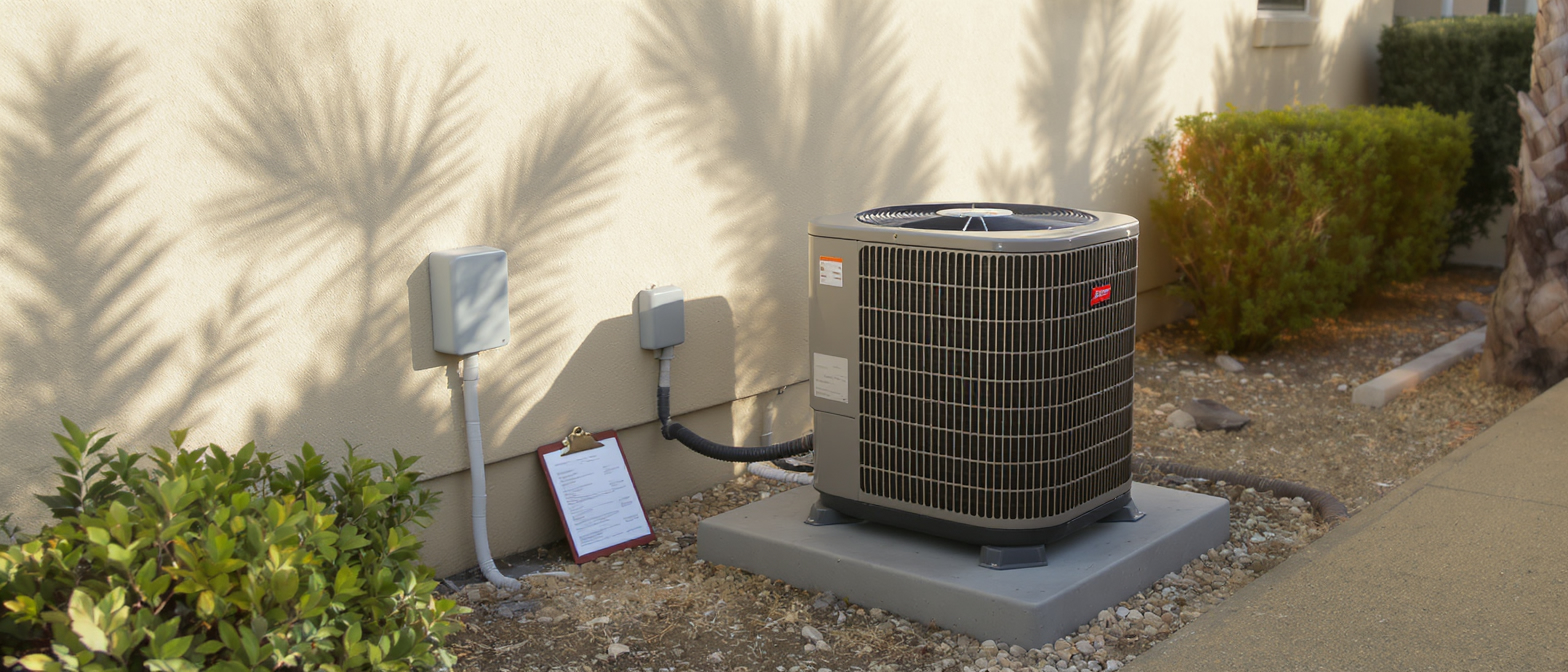
- Pad: Provide a level condenser pad or verify where a new pad will be placed. In seismic zones, confirm anchoring and seismic strapping details.
- Clearances: Trim shrubs and remove debris to achieve manufacturer clearances for airflow and service.
- Drainage: Ensure the area does not flood; consider a slight slope or risers for the base.
Air quality and ductwork
- Ducts: If reusing ducts, check for damage, kinks, or missing insulation. HERS duct leakage testing may be required.
- Filters: Identify filter sizes and locations so you can stock replacements.
- IAQ: Decide whether to add fresh air, high‑MERV filters, or a media cabinet to manage wildfire smoke and allergies.
The day before
Logistics and dust control
- Parking and elevators: Reserve space and elevator time if in a multi‑unit building.
- Surfaces: Cover floors in work paths; set aside drop cloths if you have preferred protection.
- Walls and ceilings: Take down photos, mirrors, and mounted TVs near work areas.
Safety disclosures
- Asbestos and lead: If your home is older, flag any known asbestos in ducts, tape, or insulation, and lead paint on surfaces. Abatement must be handled by qualified specialists.
- Combustion appliances: Provide clearances around furnaces and water heaters; maintain code‑required air supply and venting.
Day‑of installation
Meet the crew and review the plan
Walk through indoor and outdoor locations, confirm thermostat and indoor unit heights, refrigerant line paths, and where the condensate drain will terminate. For mini splits, confirm wall sleeves and line‑set cover routes.
Power, Wi‑Fi, and smart setup
- Provide access to electrical panel for lockout/tagout.
- Have Wi‑Fi credentials ready for smart thermostat or connected controllers.
Quality and code checkpoints
- Refrigerant lines: Confirm proper insulation, flare torque or brazed joints, and a pressure/vacuum test before releasing refrigerant.
- Condensate: Verify trap, slope, cleanout, and safe termination (to exterior or approved drain) with an overflow safety switch where required.
- Airflow: Verify blower tap settings and duct balancing; document external static pressure.
- Compliance: For Title 24/HERS testing, schedule the rater visit for airflow, fan watt draw, duct leakage, and charge verification.
After installation and commissioning
System handoff
- Thermostat: Calibrate, set schedules, and enable eco or humidity features as needed.
- Documentation: Keep manuals, warranty, and permit card together; record model/serial numbers.
- Maintenance: Set reminders for filter changes, coil cleaning, and professional tune‑ups.
The first 48 hours
- Listen for unusual noises, vibrations, or odors; many new‑system smells fade quickly.
- Check condensate lines during cooling for leaks or backup.
- Take photos of final setup and labels; they help future service and insurance claims.
Special notes for Southern California homes
In Los Angeles County and nearby Orange County, Ventura County, and Western Riverside County, local codes and climate shape your prep list. Coastal homes benefit from anti‑corrosion coatings and frequent coil rinsing due to salt air. Foothill and canyon areas may need higher MERV filtration for wildfire smoke. Attics often need upgraded insulation and air sealing for comfort and Title 24 compliance. Seismic strapping, proper gas appliance clearances, and secure condenser anchoring are standard. Cities we commonly see include Los Angeles, Long Beach, Santa Monica, Pasadena, Glendale, Burbank, Irvine, Anaheim, Costa Mesa, Santa Ana, Newport Beach, Oxnard, Ventura, Thousand Oaks, Simi Valley, Riverside, Corona, and Temecula.
What not to DIY
Electrical connections, refrigerant handling, pressure testing, and charge verification require EPA‑certified technicians and proper instruments. Improper work can create shock hazards, refrigerant leaks, reduced efficiency, and property damage. Many insurers and manufacturers require installation by licensed contractors and documented commissioning to keep coverage intact.
Who we are
#1 AC Guys is a fourth‑generation family of engineers with 80+ years in engineering, serving residential and commercial projects across Los Angeles County and nearby regions including Orange County, Ventura County, and Western Riverside County. Our mission is healthy air at home for a healthy life. Our engineers trained at the factories of Fujitsu (Japan), Mitsubishi Electric (Thailand), Midea (China), Gree (China), and Hier (China). We specialize in large and complex projects, from central air systems to advanced ductless mini split solutions.
Quick checklist
- Manual J design confirmed; equipment locations and clearances approved.
- Permit pulled; HOA notified; HERS testing scheduled if required.
- Electrical panel capacity verified; dedicated circuit and disconnect planned.
- Clear 3‑ft pathways; protect floors; remove fragile items; plan pet safety.
- Condenser pad level; vegetation trimmed; drainage adequate; seismic anchoring ready.
- Duct condition reviewed; filter sizes noted; IAQ upgrades decided.
- Asbestos/lead status disclosed; gas appliance clearances maintained.
- Wi‑Fi credentials ready; photo documentation planned.
Yasmine is currently an Associate Professor of Psychology at Mount Saint Mary College where she teaches a wide array of courses in the Psychology department. She is a Fulbright Scholar spent a year working at the Medical Decision Making Center at Ono Academic College in Israel.
Yet, as many higher education professionals can surely attest to, I have also witnessed the other challenge in group decision making. In academia, engaging in critical dissent is encouraged (reviewed by Jetten & Hornsey, 2014), and while this is a fine attribute, practically,

