


Signs of an Overheating AC Compressor
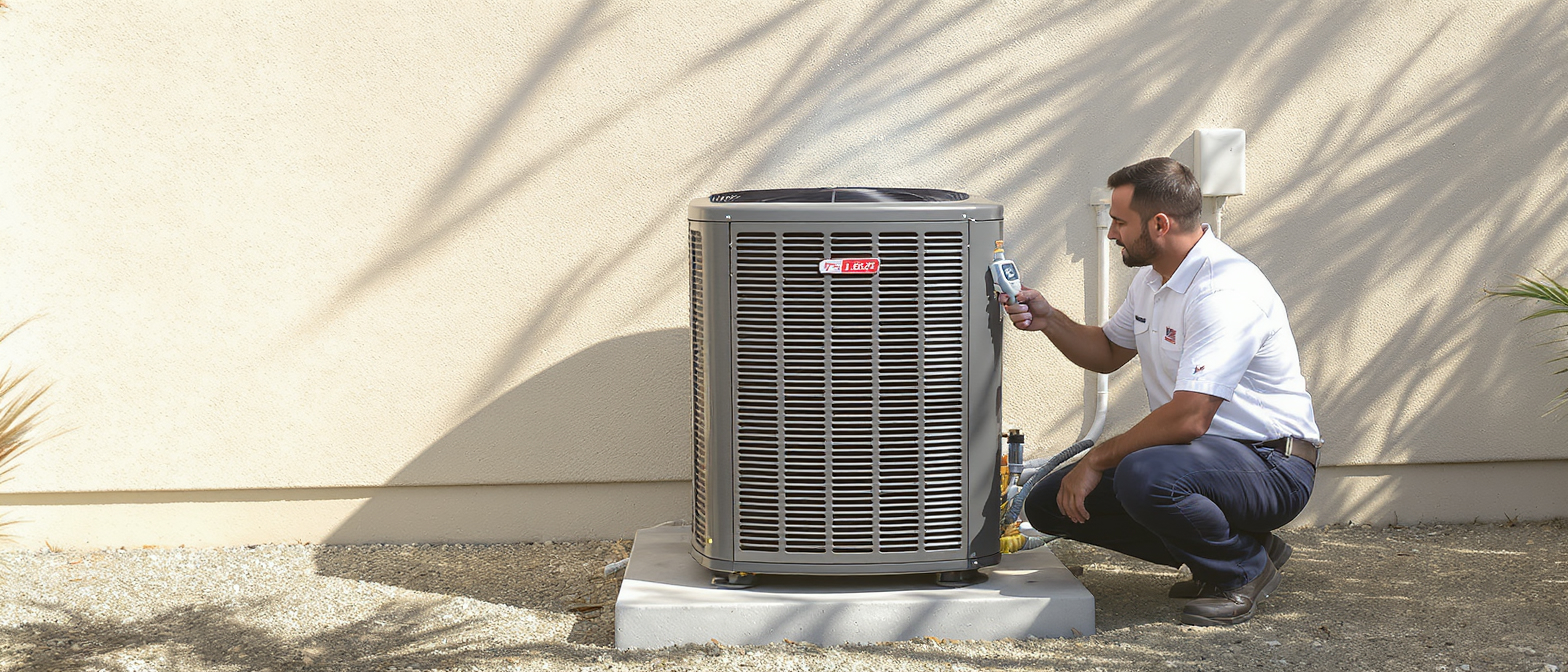
What overheating means and why it matters
An overheating AC compressor is a warning that heat is trapped where it should be leaving the system. The compressor’s motor and windings run at high load; when heat is not removed fast enough, internal temperatures spike, oil thins, insulation breaks down, and a thermal overload switch may trip. Repeated overheating shortens compressor life and can cascade into costly damage across the refrigerant circuit and electrical system.
Common signs your AC compressor is overheating
- Unit shuts off on the hottest afternoons and comes back after a cool-down period. That pause often indicates a thermal overload trip.
- Outdoor condenser shell and discharge line feel extremely hot to the touch shortly after startup.
- Weak or no cooling indoors despite the thermostat calling for cooling; supply air is barely cooler than return air.
- Frequent short cycling: compressor starts, hums, then clicks off within minutes.
- Breaker trips or a fused disconnect shows heat discoloration. Repeated trips are a red flag, not a fix.
- Burning odor, melted wire insulation, or darkened contactor points near the condenser cabinet.
- Loud humming or grinding followed by a shutoff. A failing run capacitor or high head pressure can create this pattern.
- Condenser fan runs but the compressor does not, or the outdoor fan speed seems abnormal while the cabinet radiates excessive heat.
- Smart thermostat or inverter board logs high temperature or high head pressure error codes.
- Energy use spikes compared to similar weather days, with longer runtimes and higher bills.
Why compressors overheat
- Restricted condenser airflow: cottonwood, dust, or bent fins block heat rejection; shrubs or walls are too close; the condenser fan fails or runs backward after a wiring error.
- Dirty indoor filter or evaporator coil: low indoor airflow raises discharge temperature and can overheat the compressor even on mild days.
- Refrigerant issues: incorrect charge, non-condensables, or restrictions increase compression ratio and discharge temperature. Refrigerant work is regulated and must be handled by an EPA-certified technician.
- Electrical faults: weak run capacitor, pitted contactor, low voltage, or undersized wiring increases amp draw and heat.
- High ambient and heat-island effects: roof-mounts, tight alcoves, and reflective surfaces can push condensing temperatures beyond safe limits.
- Mechanical wear: bearing friction, valve plate damage, or poor oil return elevates internal temperature.
- Design mismatches: long line sets without proper accessories, undersized or fouled coils, or misapplied equipment.
Immediate steps if you suspect overheating
- Turn the system off at the thermostat. If the cabinet is excessively hot, use the outdoor disconnect to let it cool safely.
- Clear debris around the condenser and restore at least 2 to 3 feet of free space on all sides and 5 feet above. Do not block airflow with tarps or dense shrubs.
- Replace a dirty indoor air filter and open closed supply and return registers to restore airflow.
- Do not hose a running unit. If you rinse the condenser coil, power must be off and water pressure gentle to avoid fin damage.
- Document symptoms and timing. Many homeowner and commercial insurance policies may require licensed HVAC service for covered repairs, so keep notes and photos and check your policy.
- Seek a qualified HVAC professional to evaluate charge, electrical components, airflow, and controls. DIY refrigerant or high-voltage work can be unsafe and may void warranties or insurance coverage.
Preventing compressor overheating in Southern California heat
- Seasonal maintenance: clean condenser and evaporator coils, verify fan operation, and straighten fins.
- Airflow first: correct filter size and MERV rating, clear returns, balance registers, and inspect ductwork for kinks or collapse.
- Confirm proper refrigerant charge with superheat and subcooling by an EPA-certified technician; correct any restrictions or non-condensables.
- Electrical health: test run capacitor, contactor, and wiring under load; verify voltage and breaker sizing.
- Measure what matters: record compressor amp draw, discharge line temperature, and head/low-side pressures during peak afternoon heat.
- Shade without smothering: provide light shading but maintain full airflow; avoid enclosing the condenser.
- Smart staging: use a programmable or smart thermostat with gentle ramping or two-stage logic to limit hard, mid-afternoon starts.
Why expertise matters on complex residential and commercial systems
#1 AC Guys is a family-owned, fourth-generation team of engineers based in Southern California. Our family has 80+ years of engineering experience, and we apply that depth to residential and commercial HVAC, especially large and complex projects that demand careful heat-load, airflow, and electrical analysis. Our engineers have completed factory training with Fujitsu in Japan, Mitsubishi Electric in Thailand, Midea in China, Gree in China, and Haier in China, focusing on compressor protection, inverter logic, and modern diagnostics.
Our mission is healthy air at home for a healthy life, which starts with systems that run cool, clean, and within design limits. In many overheating cases, the root cause spans multiple domains—refrigerant physics, electrical integrity, duct design, and controls. That is why insurance carriers often look for a licensed professional’s documentation when a claim involves a failed compressor or electrical component. A thorough, standards-based diagnosis helps protect your equipment, your warranty position, and your safety.
Service area
We serve Los Angeles County and nearby regions, including Orange County, Ventura County, and Western Riverside County. Typical communities include Los Angeles, Long Beach, Pasadena, Glendale, Burbank, Santa Monica, Torrance, Pomona, Thousand Oaks, Ventura, Oxnard, Anaheim, Santa Ana, Irvine, Costa Mesa, Huntington Beach, Riverside, Corona, and Temecula.
Key takeaway
If you notice hot shutdowns, breaker trips, weak cooling, or a burning odor, treat them as signs of an overheating AC compressor. Power down, restore airflow, and arrange a professional evaluation before the next heat wave. Quick, informed action can save a compressor and keep your indoor air healthy through the SoCal summer.
Yasmine is currently an Associate Professor of Psychology at Mount Saint Mary College where she teaches a wide array of courses in the Psychology department. She is a Fulbright Scholar spent a year working at the Medical Decision Making Center at Ono Academic College in Israel.
Yet, as many higher education professionals can surely attest to, I have also witnessed the other challenge in group decision making. In academia, engaging in critical dissent is encouraged (reviewed by Jetten & Hornsey, 2014), and while this is a fine attribute, practically,

